

R32 refrigerant air conditioner technology is changing the way homes and businesses manage cooling, blending energy efficiency with lower environmental impact. If you’re comparing new AC units or planning an upgrade, it’s crucial to understand the benefits and common challenges of R32 systems to make the best decision.
Key Takeaways
- The R32 refrigerant air conditioner market is growing, driven by energy savings and global green initiatives.
- R32 refrigerant offers up to 10% greater efficiency and a significantly lower Global Warming Potential (GWP) than previous refrigerants.
- Installation and regulatory nuances matter — especially as data gaps, compliance deadlines, and retrofit needs remain challenging for US homeowners.
- What Is an R32 Refrigerant Air Conditioner & Why Is It Important?
- How to Choose and Install an R32 Refrigerant Air Conditioner
- Advanced Analysis: Pitfalls, Data Gaps, and Real-World Issues
- Conclusion
- Frequently Asked Questions
What Is an R32 Refrigerant Air Conditioner & Why Is It Important?
R32 refrigerant air conditioners use R32 as the cooling agent in their compressor circuits. R32 is a hydrofluorocarbon (HFC) with a Global Warming Potential (GWP) of 675 — less than half that of R-410A and far below older refrigerants such as R-22 (source). Homeowners and facility managers are switching to R32-based AC units for three primary reasons:
- Improved energy efficiency: R32 systems can lower electricity use by up to 10% versus R-22 options, making them more affordable to run (source).
- Market-driven compliance: Global regulations (such as the F-Gas Regulation and AIM Act) are phasing out high-GWP refrigerants, boosting demand for R32 solutions (source).
- Environmental impact: R32’s lower GWP helps reduce your carbon footprint versus legacy refrigerants, which is now a requirement in many regions.
By 2024, the global market for R32 refrigerant ACs ranged from $2.1 to $12.7 billion, with Asia-Pacific accounting for almost half of all units sold (source). The dominant product type is split air conditioners, making up over half of 2024 revenue and the majority of residential installs.

This transition doesn’t just reduce emissions; it can also lower power bills and align your home with the next generation of energy and safety standards. If you’re interested in optimizing comfort and environmental performance, transitioning to R32 technology is worth considering. You can boost indoor air quality even further by pairing your AC upgrade with proper control humidity and the right filtration system.
How to Choose and Install an R32 Refrigerant Air Conditioner
Switching to an R32 refrigerant air conditioner, whether in a new build or as a retrofit, requires careful planning. Here’s your practical guide:
- Assess your cooling needs: Calculate the size (in tons or BTUs) required for your space. Most homes use 1–1.5 ton R32 units, covering average rooms efficiently (source).
- Check electrical compatibility: Ensure your wiring meets the requirements of modern inverter-based R32 units, which may differ from older or non-inverter ACs.
- Select reputable brands and models: Choose ACs with strong warranties and accessible repair support. Study product specs; while official SEER/EER ratings may be missing, R32 units generally outperform R410A and R22 equivalents.
- Hire certified HVAC professionals: Installation and charging of R32 refrigerant should always be performed by technicians with up-to-date certification and knowledge of the latest standards.
- Be mindful of flammability: R32 is mildly flammable and must be handled following local fire codes and labeling guidance.
- Don’t neglect maintenance: Schedule regular checkups and leak inspections to maximize both efficiency and lifespan. This also supports indoor air quality by controlling dust and allergens.
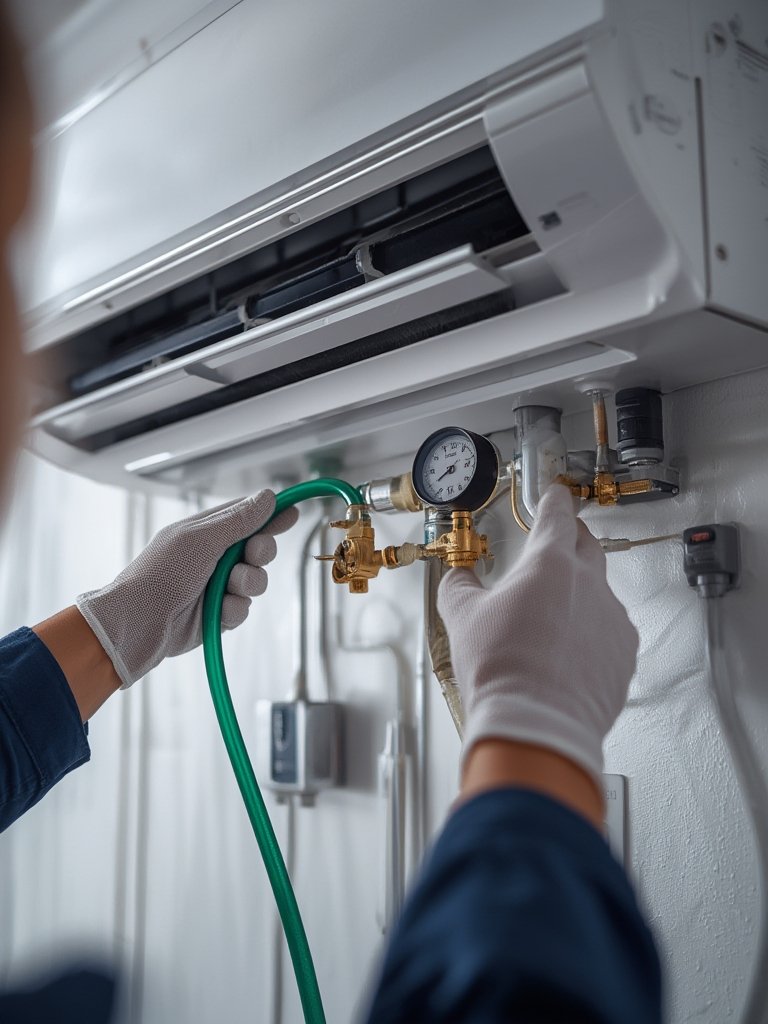
If downsizing or modernizing your HVAC system, consider adding smart thermostats or integrating with advanced filtration solutions. This can maximize both efficiency and air quality benefits.
Advanced Analysis: Pitfalls, Data Gaps, and Real-World Issues
Despite the momentum behind R32 refrigerant air conditioners, there are important pitfalls and data gaps to be aware of:
- Lack of US-specific data: Most market research emphasizes Asia-Pacific and Europe, leaving a gap in localized US stats, adoption challenges, and performance reviews.
- Missing maintenance and install details: Hard numbers for retrofit costs, professional labor fees, and lifecycle expenses are largely unavailable.
- Regulatory uncertainty: Specific 2025 EPA compliance dates and US R32 installation standards are not clearly mapped out; always check with local authorities and consult updated guidance (source).
- No published complaint/incident data: Current research lacks visibility into user complaints, compressor reliability, and warranty claim rates for R32 air conditioning systems.
- No specific SEER/EER data: While efficiency claims are strong, exact model-by-model comparisons to R410A or R22 are scarce. This can make apples-to-apples shopping difficult.
- Environmental disposal protocols unclear: End-of-life recycling or disposal guidance for R32 refrigerant and AC components is not widely published—ask prospective vendors for a clear answer.
- Supply chain and price volatility: R32 price fluctuations and availability issues can impact project timelines or operating expenses.
| Refrigerant | Global Warming Potential (GWP) | Typical Energy Efficiency | Notes |
|---|---|---|---|
| R32 | 675 | Up to 10% better than R22 | Lower GWP, mildly flammable |
| R410A | 1,430 | Standard baseline | Non-flammable, higher GWP |
| R22 | ~1,810 | Least efficient | Banned in many countries; very high GWP |
When planning a switch, expect to run into data limitations—especially if you’re looking for unified US-specific guidelines or complete technical specs. For best results, engage with HVAC professionals up front, and consult resources on controlling humidity and HVAC air quality best practices in your region.

Conclusion
R32 refrigerant air conditioners are leading a global shift toward more efficient, environmentally responsible home and commercial cooling. While they promise lower GWP, up to 10 percent energy savings, and broad international adoption, there are practical tradeoffs to consider — from installation and retrofit specifics to regulatory uncertainty in North America. To protect your investment and achieve the best results, combine R32 upgrades with regular maintenance, technician verification, and a focus on total indoor air quality. Ready for a smarter, greener, and more efficient AC? Contact a certified professional to discuss whether an R32 refrigerant air conditioner is right for your property.
Frequently Asked Questions
Is R32 refrigerant safe for home use?
R32 is classified as mildly flammable, so it must be installed by trained professionals following all safety protocols. When handled correctly, it’s safe for residential and commercial application, but always follow product labeling and local fire codes.
Can I retrofit my old R410A or R22 air conditioner to use R32?
In most cases, direct retrofitting is not possible due to differences in pressures, oil compatibility, and safety standards. Upgrading typically means installing a new R32-compatible system. Consult a licensed HVAC technician before making changes.
Does R32 improve energy efficiency over older refrigerants?
Yes, R32 air conditioners can cut electricity consumption by up to 10% compared to R22, and typically outperform R410A in terms of cooling power and efficiency (source).
Are there specific maintenance requirements for R32 units?
Maintenance for R32 ACs is similar to other systems but must be performed by technicians certified to handle mildly flammable refrigerants. Regular inspections, leak testing, and cleaning keep the unit efficient and safe.
How does R32 impact the environment compared to R410A?
R32 offers a Global Warming Potential of 675, which is less than half that of R410A and significantly greener than R22. Its adoption supports international efforts to curb carbon emissions and meet evolving green building standards (source).